

Dearest Beloveds,
Recently I had this conversation with E. “I am trying to stop myself from interrupting. I think it is a terrible habit.”
“Well, I don’t think it’s terrible. My mother interrupts to change the subject. You interrupt because you anticipate the next thing I am going to tell you in the story - and share.”
“Oh E, you are too kind. Another way of saying that is that I am too impatient with you to finish your own story. I predict what you are going to say to show off that I know where you are going. Blerg.”
“Well, I guess that is one way to look at it.”
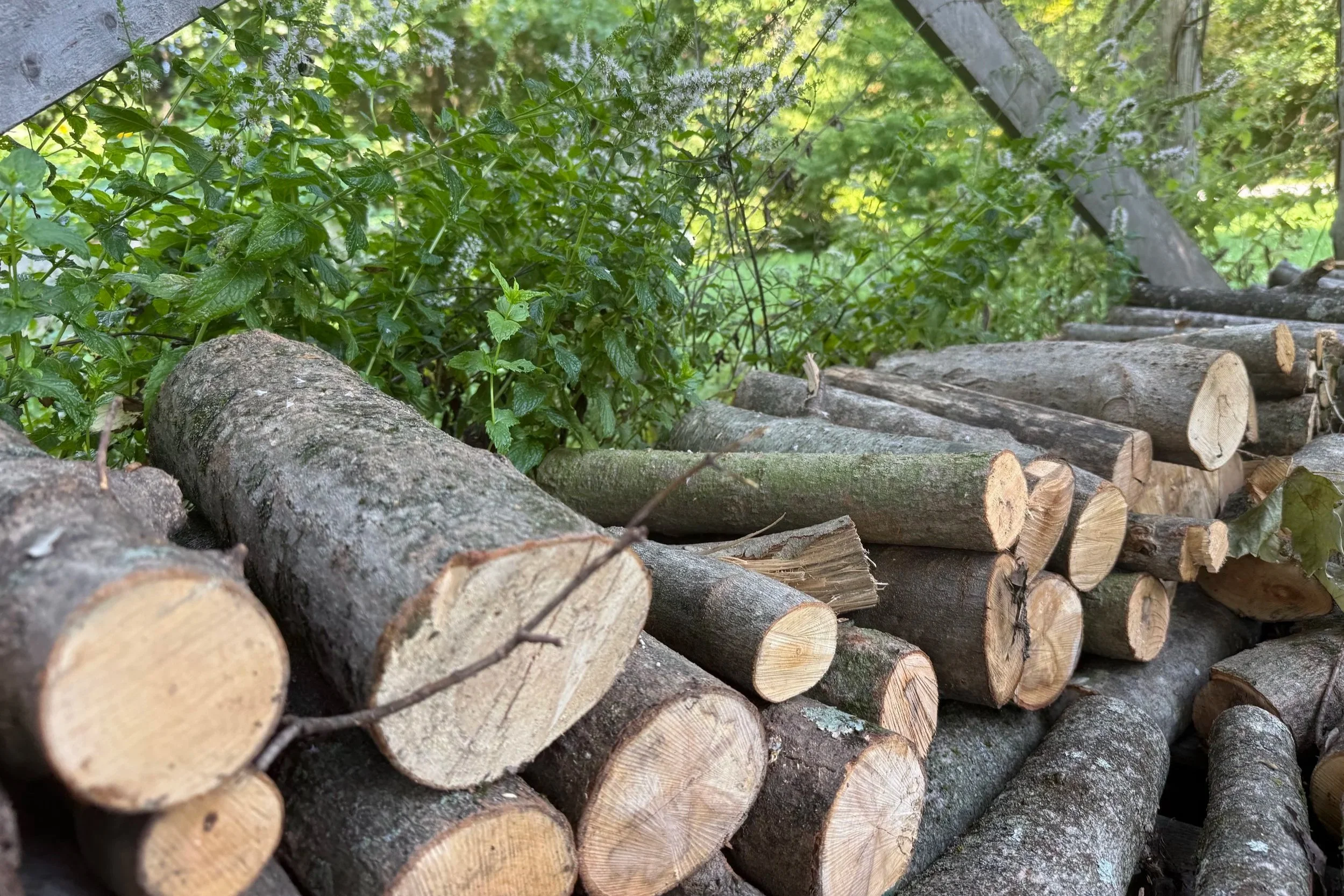
A part of me feels foolish using the word samadhi to describe the immersive experience that I experienced stacking wood. Samadhi/Bliss is the considered by some to be the goal of all yoga - the blissful state reached once you have gone through all of the other seven states. Some consider there to be a hierarchy (a path) through from Yamas/Virtues, Niyamas/Internal observations, Asanas/Poses, Pranayama/Breath Control, Pratyahara/Withdrawal of senses, Dharana/Concentration, Dhyana/Meditation, all the way to reach Samadhi.
I feel this teleological view of Pantanjali’s discourses on consciousness is not true - rather than a road, it is a circle.

“So, wait, what is the bunny’s name again? She has been Lucky. Luckier. Lucky II.”
“Willett - it is a cross between willow and lettuce. She likes to eat willow and lettuce.”
“Am I spelling that with an “e” on the end to make it feminine or do we care?”
“We don’t care.”
Willett, the bunny born around Easter, has joined the scene and here is what we have learned so far.

Dearest beloveds,
The Ancient Greeks had two words for time: chronos and kairos. “Chronos is the ticking of the clock, the zombie steps of just getting on with life… Kairos means “the right moment.” - the opportune time. It stops the clocks.” (Thank you Jonny Thomson of Mini Philosophy for that succinct summary.)
Our modern culture thrives on chronological time. Constantly checking off commitments in a schedule of doings causes our awareness to skim along the surface of life. I highly recommend cultivating regular moments where you can slow to appreciate the magic of life.* It is only once once you pause, lower your shoulders, unclench your butt, take three breaths that the opportune time becomes apparent. Kairos resides outside of the rush.

Dearest Bean,
I was closing up the kitchen before heading down to brush my teeth and corral you and your brother into bed. Bending over the couch to turn off a light, I hear your voice from the kitchen.
“Mom, what is porno?”
What the FUCK?!
“Where did you learn that word?”
“It is right here - in the table of contents of your book.”
Dearest Dragon,
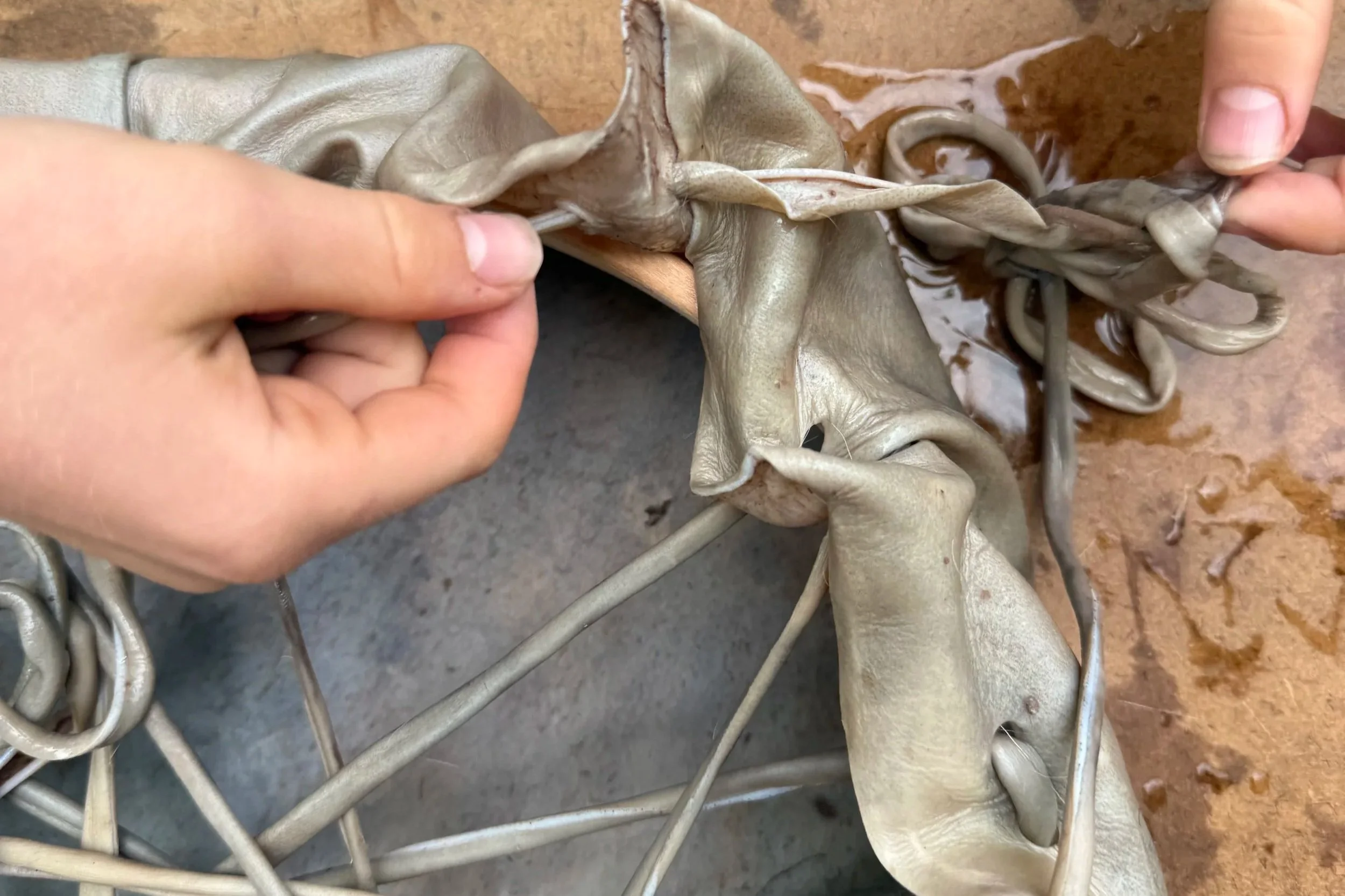
What a shining day it was! Making a hand drum with Mark Ressl of The Giving Trees in Rosendale has to be possibly one of the most true experiences of my 49 years on this planet. True as in killing chickens, eating a porcupine, giving birth, my God immersion experience, and sitting with Baba’s body after he passed - that level of true.
Really, Mom, you are saying this about a drum making workshop?
Yup, my dearest, I am.
Life comes from death. Which, in turn, makes more life. It is one big circle. It is all the same thing - just different forms.
The life of a drum comes from the death of an animal. Our life comes from the death of vegetables and animals that feed us. One day, in turn, our lives will nourish worms and plants. This is truth.

“Padiddle!”
“Where?”
“The blue truck behind us.”
“Bean, you have padiddle glasses on.”
And she does.
“Why don’t you wear your sister’s pink rain jacket until we get you a new one.”
“Mom! Nooo! I will bring my other too small one to school.”
Sigh. Is this because it is pink? Or because your sister has cooties?
“Okay.”
No reason to delve. He has to figure out this himself. Just be grateful for all of those years you were dressing him in whatever gave you pleasure.

Recently, I participated in the CTTT (Coming to the TABLE) Circle Process Training.* I wrote about volunteering with my children for CTTT Freedom Walk 2026 (happening this Monday in NYC, see you there!)
The Circle Process Training was an online course where CTTT Circle Keepers went over the format and modeled the Circle Process - the format for all CTTT meetings.
According to the facilitators (huge shoutout to Stacy/Gretchen) the Circle Process is, “a deliberate container to encourage emotional vulnerability and trust around a very charged issue.”
A deliberate container to encourage emotional vulnerability and trust around a very charged issue.
I almost want to write that sentence again and again because I am so in awe with the intelligence and maturity of that idea (emotionally, spiritually, somatically, etc).
Could you imagine if our civic spaces created a deliberate container to encourage emotional vulnerability and trust around a very charged issue. The mind boggles - maybe someday. In the meantime, there are regular meetings that ARE doing this good work and have been for 20 years.


Midterms loom. The US Military tests soldier testosterone levels. Spotted lanternfly devours. On and on and on. It is time to focus on some good news.
Forest Defense: Hunting for a Better Future.
I envision their marketing in the future to read… For over 30 years we have provided one commonsense solution to two seemingly intractable issues.